



Limin Ma 編集者 at IgMin Research
Our goal is to facilitate an environment of cross-disciplinary interaction for greater progress.
バイオグラフィー
Dr. Limin Ma is an assistant researcher at the Lanzhou Institute of Chemical Physics, Chinese Academy of Sciences. His current research focus is on the nanocomposite and supramolecular materials design, preparation, and structural control and their lubrication and sensing application.
Dr. Ma is the author of more than 40 publications in international academic journals, including Tribology International, Tribology Letter, Carbon, Chemical Engineering Journal, and ACS Applied Materials & Interfaces, ACS Applied Nano Materials. Additionally, he has been granted for 7 patents in sensing devices and lubrication materials.
研究の興味
Nano-composites and supramolecular material design, preparation and structural control; lubrication and corrosion protection; intelligent sensing and monitoring materials.

Editor
仕事内容
Assistant Researcher
Chinese Academy of Sciences
State Key Laboratory of Solid Lubrication
China
 0000-0002-3819-2111
 トピック分野別の貢献
Why publish with us?
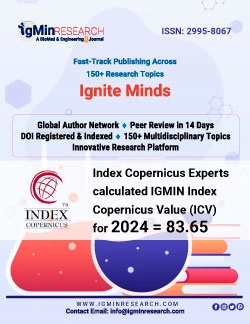
Global Visibility – Indexed in major databases
Fast Peer Review – Decision within 14–21 days
Open Access – Maximize readership and citation
Multidisciplinary Scope – Biology, Medicine and Engineering
Editorial Board Excellence – Global experts involved
University Library Indexing – Via OCLC
Permanent Archiving – CrossRef DOI
APC – Affordable APCs with discounts
Citation – High Citation Potential
現在トレンドになっている記事はどれですか?
研究論文
- Enhancing Missing Values Imputation through Transformer-Based Predictive Modeling
- A Model of the Enforcement of Laws in Tramadol Drug Abusers
- Risk of Nutritional Deficiencies and Changes in Dietary Patterns after Bariatric Surgery
- Analysis of the State of Moisture Control to Ensure and Regulate the Quality of Grain and Grain Products
- A Comprehensive Methodology for Assessing the Business Reputation of Industrial and Production Personnel
- Unveiling the Hidden Beat: Heart Rate Variability and the Vagus Nerve as an Emerging Biomarker in Breast Cancer Management