



Blood Disorders at IgMin Research | Medicine Group
We believe in bridging the gaps between fields to strengthen interdisciplinary understanding.
について
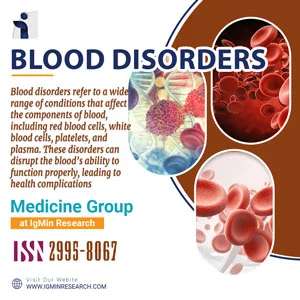
Blood Disorders encompass a broad range of conditions that affect the components of blood, including red blood cells, white blood cells, platelets, and plasma. This interdisciplinary field of study explores the causes, mechanisms, and treatment of hematological disorders such as anemia, leukemia, hemophilia, and thrombocytopenia. Researchers in this domain focus on understanding the genetic, molecular, and environmental factors that contribute to the onset and progression of these disorders. The study of blood disorders integrates insights from molecular biology, genetics, immunology, and clinical medicine to develop innovative diagnostic tools and therapeutic strategies.
Advances in Blood Disorders research are crucial for improving patient outcomes, especially given the complexity and severity of conditions like sickle cell disease and blood cancers. By leveraging modern technologies such as genomics, stem cell therapies, and targeted drug delivery, researchers are uncovering novel approaches to treating hematological diseases. This field is pivotal in advancing our understanding of blood-related conditions, ultimately leading to more effective treatments, enhanced patient care, and the potential for cures.

Why publish with us?
Global Visibility – Indexed in major databases
Fast Peer Review – Decision within 14–21 days
Open Access – Maximize readership and citation
Multidisciplinary Scope – Biology, Medicine and Engineering
Editorial Board Excellence – Global experts involved
University Library Indexing – Via OCLC
Permanent Archiving – CrossRef DOI
APC – Affordable APCs with discounts
Citation – High Citation Potential
現在トレンドになっている記事はどれですか?
研究論文
- From Traditionalism to Algorithms: Embracing Artificial Intelligence for Effective University Teaching and Learning
- Evaluating Digital Imaging Technologies for Anogenital Injury Documentation in Sexual Assault Cases
- Analytical Expressions of the Markov Chain of K-Ras4B Protein within the Catalytic Environment and a New Markov-State Model
- Detection of Adenoviruses and Astroviruses in Patients and Marine Animals in the Republic of Guinea
- Optimising the Deployment of a Last-Mile Micromobility Fleet by Accounting for Terrain-Induced Energy Consumption
- Comparing Forecasting Models for Predicting Infant Mortality: VECM vs. VAR and BVAR Specifications